New Haven’s
cameras,
on the record.

What the city’s cameras collect, what they cost, and what the public records leave unanswered.

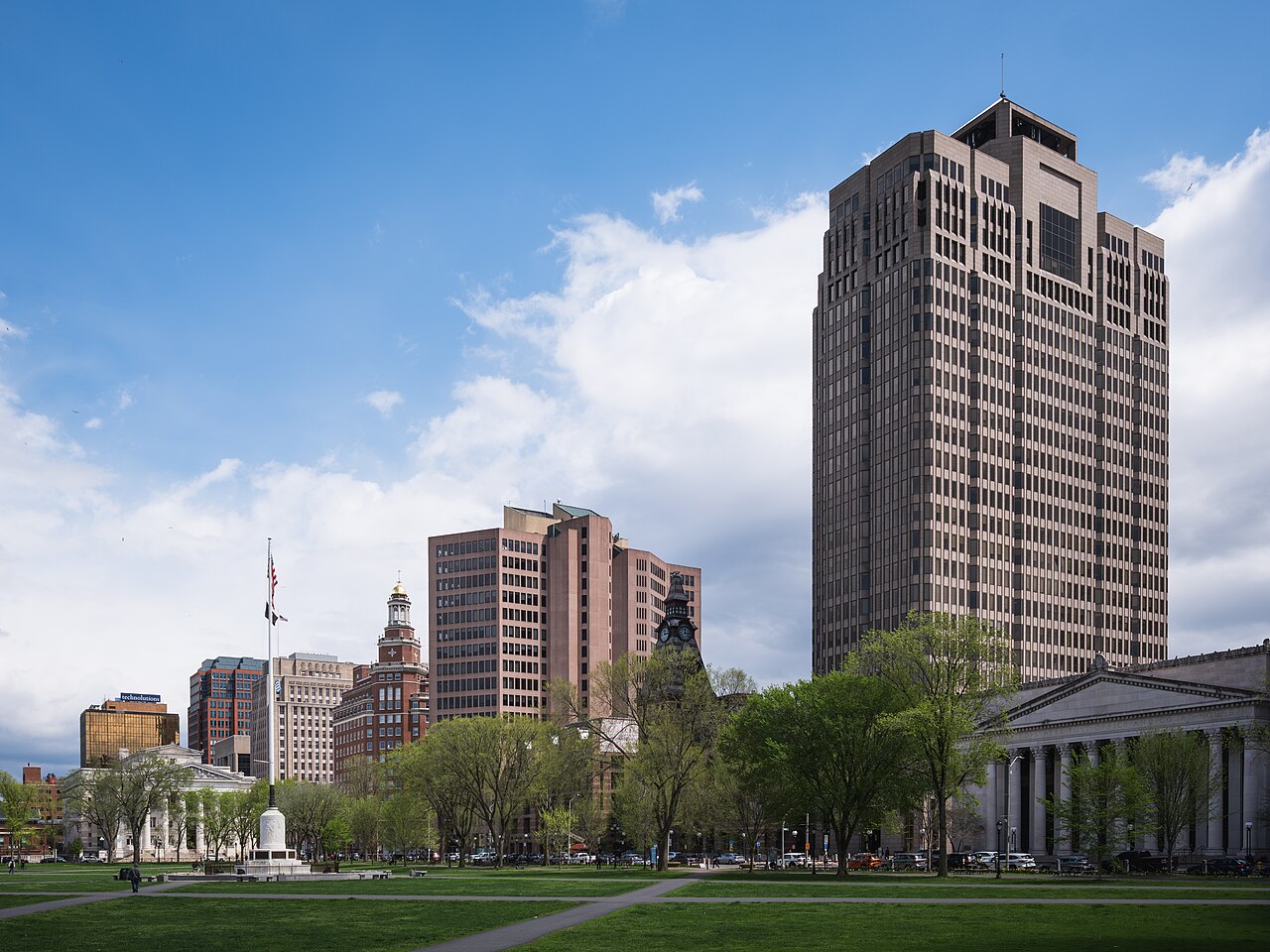
Downtown New Haven seen across the Green, with the Connecticut Financial Center at right.
Downtown from the New Haven Green · Photo: Christian David / CC BY-SA 4.0
Three requests sent. Awaiting city acknowledgment.View requests

The record at a glance

What we know. What is still missing.

$393,941.84

Fusus · three-year estimate

Planned in 2023. Actual payments still unknown.

See the fiscal statement

Up to 30

Yale-donated cameras authorized

Approval is not an installed-camera count.

See the donation approval

90 days minimum

Routine body / vehicle video

Published 2022 order. Not an ALPR retention rule.

See the retention order

License plate readers

Rekor is named in local reporting. The city’s contract and data rules are still requested.
— expand for details and sources

Local reporting identifies Rekor as New Haven’s provider of automated license plate readers, or ALPR. A published vendor statement describes customer control of data, but it does not establish the city’s price, retention period or sharing settings.

Still to learn The signed contract, retained data fields, deletion rules and outside-agency access. Covered by request A.

Request A

Fusus & the Axon agreement

Two public documents give different totals for the later Axon bundle.
— expand for details and sources

The 2023 Fusus fiscal statement estimates $393,941.84 over three years: an annual subscription of $119,647.28 and $35,000 for seven AI appliances. These are planned costs, not verified payments.

A later Axon bundle includes Fusus maintenance, body and vehicle cameras, Tasers and software. Its signed 2024 authorization lists $7,619,019.18; the revised fiscal statement lists $7,731,551.86. The difference needs clarification. Neither figure is a citywide camera spending total.

Still to learn The executed agreements and governing price, what data the system retains, and the rules for viewing, searching, sharing and deleting it. Covered by request B.

Request B

Yale–city sharing

The donation proposal allows reciprocal viewing and cites a 1992 agreement.
— expand for details and sources

The June 2026 approval allows up to 30 cameras over three years. The proposal describes an initial 10 cameras, five years of licensing and service, and reciprocal Yale–city viewing privileges. It cites a 1992 police memorandum of understanding.

The fiscal statement estimates $8,000 a year in city data costs for 30 cameras. That is an operating-cost estimate; the documents do not establish how many cameras are now installed.

Still to learn The complete 1992 agreement, current camera-access rules, and executed donation and licensing terms. Covered by request C.

Request C

Private cameras

Registering a camera and allowing live police access are different choices.
— expand for details and sources

Connect New Haven describes two kinds of participation. Registering a camera gives police a way to ask its owner for footage. Integrating a camera allows live viewing with the owner’s permission, without a new notification each time police access it.

Those are the program’s published descriptions. They do not establish which analytical features are enabled, how often cameras are accessed, or what happens to saved clips.

Still to learn The blank owner-consent agreement and the policies governing access, retention and onward sharing. Included in request B.

Request B

Body & vehicle cameras

The published retention policy covers body and vehicle video, not ALPR or Fusus.
— expand for details and sources

The published police manual contains General Order 7.10, effective June 14, 2022. It sets a minimum of 90 days for routine video and a minimum of four years for other evidentiary or preserved video, with longer preservation in specified circumstances.

A minimum is not an automatic deletion date. This order covers body and vehicle cameras; it does not establish the retention period for ALPR records or integrated Fusus video.

Still to learn Whether a successor or supplement has changed this order. That question remains outside the three requests already sent.

Current policy still to verify · outside the three requests

Three requests. Still open.

Sent · Awaiting acknowledgment as of .

  1. Request A: Rekor / ALPR

    Contracts, data fields, retention and agency sharing.

    1. Sent — confirmed October 19, 2026
    2. Acknowledged — pending
    3. Records received — pending

    Awaiting acknowledgment

    Read request A
  2. Request B: Fusus / Axon

    Agreements, pricing, video policies and owner consent.

    1. Sent — confirmed October 19, 2026
    2. Acknowledged — pending
    3. Records received — pending

    Awaiting acknowledgment

    Read request B
  3. Request C: Yale / City

    The 1992 agreement, camera access and donation terms.

    1. Sent — confirmed October 19, 2026
    2. Acknowledged — pending
    3. Records received — pending

    Awaiting acknowledgment

    Read request C

Next acknowledgment check: . This is a follow-up date, not a production deadline.

Request status & public-copy notes

Sending is confirmed; city receipt has not yet been acknowledged. No city request numbers have been assigned in the correspondence reviewed. The public copies omit the sender’s contact information and signature. This is a dated record, not a live inbox.

Go to the source

City documents

Reporting & research

About this guide & review notes

An independent guide to camera systems in New Haven, Connecticut. It is not affiliated with the city, Yale or EFF.

The source review covered all 22 attachments in the three city files above, the published body/vehicle-camera order, and the linked reporting and program pages. The complete police manual was not exhaustively searched. EFF’s entries are research leads, not a complete current inventory.

Public approvals establish what was authorized, not necessarily what was bought, installed or used. A document we have not found may still exist. Traffic enforcement and other surveillance technologies need separate review.

The city’s responses to requests A, B and C are the next records to review.